

Your next customer could have 16 people weighing in on the purchase. Do you have content that speaks to each of them?
Imagine you’re marketing a new software platform. Your campaign reaches a marketing director who sees an opportunity to improve team performance. They’re interested, but before the company moves forward, IT needs to review integration requirements, finance wants to understand the cost, and leadership needs a strong reason to invest.
One solution. Several stakeholders. Different questions that need answering.
This is the reality of B2B purchasing, where winning over your primary contact doesn’t always equal winning the business.
For marketers, the challenge is figuring out how to reach everyone involved in the decision and give them the information they need to support it.
How Big Are B2B Buying Committees Today?
During our recent EndeavorB2B Lunch & Learn, Chief Marketing Officer, Amanda Landsaw, shared research indicating that the average B2B buying committee had grown from approximately nine people to 16 internal stakeholders.
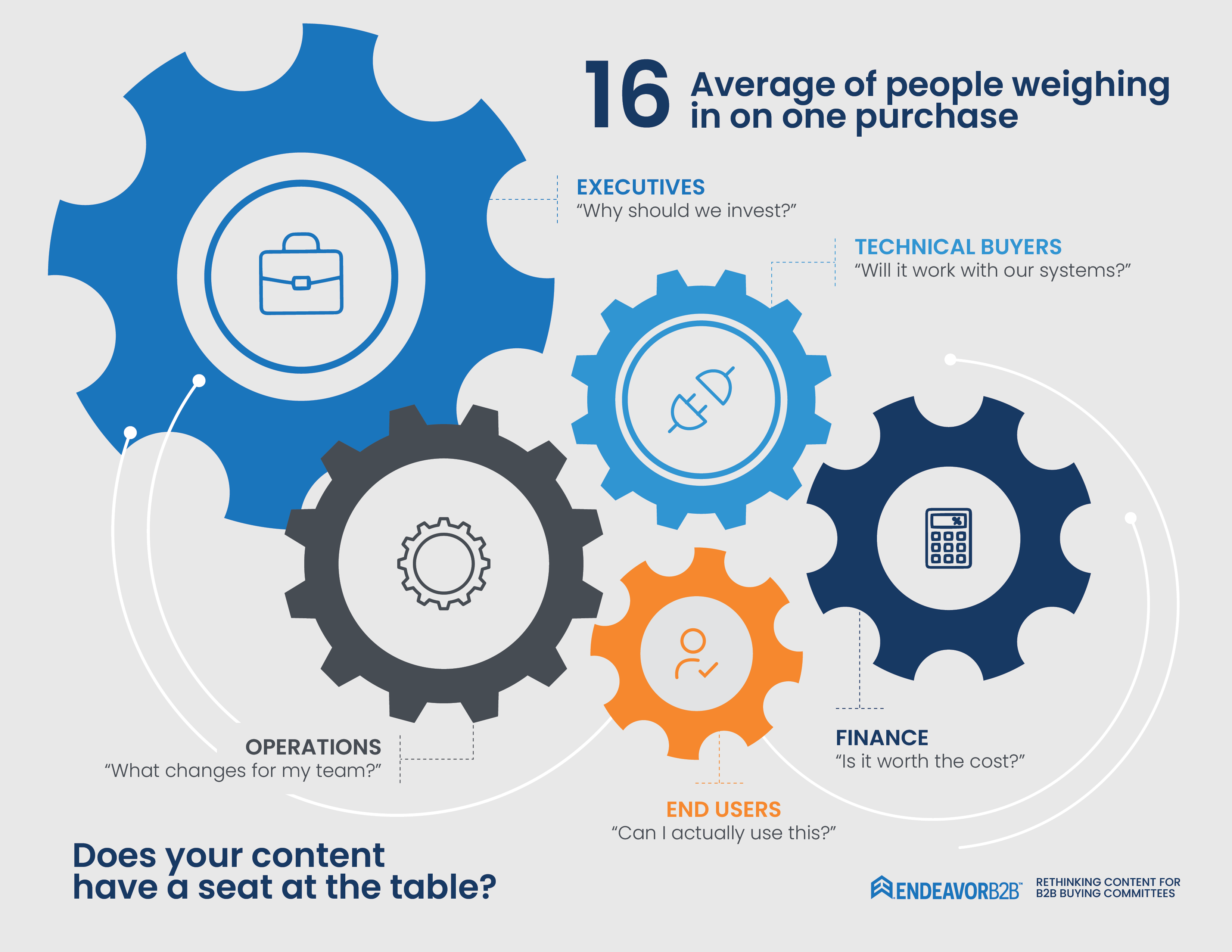
While committee size varies by organization and purchase, the implications for marketers are significant. More stakeholders mean more priorities to consider, more questions to answer, and more opportunities for a purchase to stall.
That number stood out to me. Consider how much effort marketers put into understanding their ideal customer, developing personas, and tailoring campaigns to specific decision-makers. Now imagine having to account for 16 different perspectives on the same purchase. It raises an important question: Are we creating content that supports how B2B purchasing decisions actually happen?
As Amanda explained during the session:
“If we’re just focused on one or two people within that buying committee, we’re really missing out on a broader group.”
In her article, More People Are in the Room Than Your ICP Thinks, Amanda explores why traditional ideal customer profiles (ICPs) often overlook people who influence purchasing decisions.
A campaign may successfully reach the person responsible for researching solutions while missing the stakeholders responsible for approving the investment. That raises an important question: Once you’ve identified who’s involved, how do you create content that speaks to each person’s priorities?
What Content Does Each Buying Committee Member Need?
Think about your current content library. How much of it speaks to the person who first discovers your product? How much helps someone justify the investment, evaluate technical requirements, or prepare their team to use it?
During the Lunch & Learn, Amanda identified five stakeholder groups that approach purchasing decisions with different priorities. Here’s how you can address each one through your content.
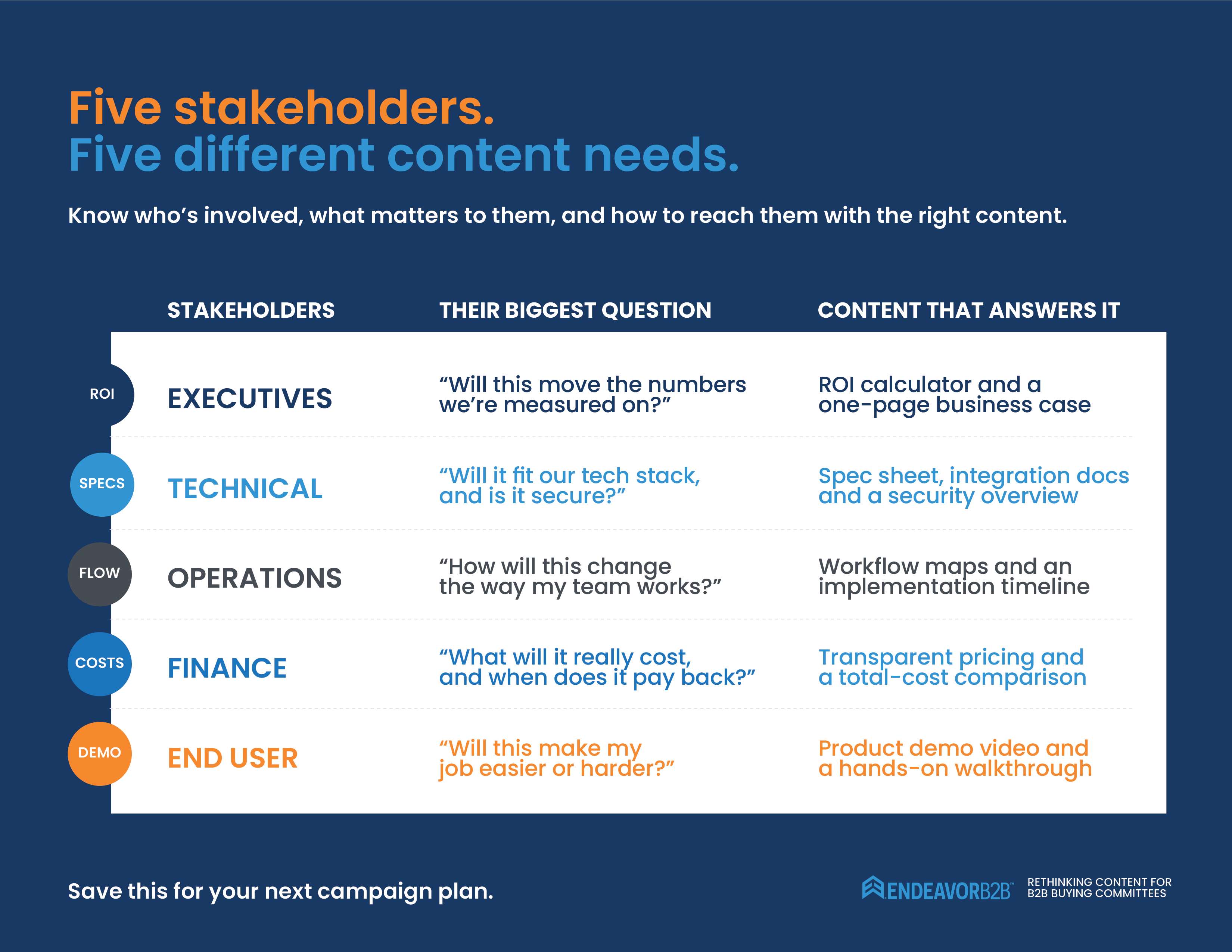
Executives: Connect Your Solution to Business Goals
Executives want to understand how an investment supports the organization’s priorities. They’re evaluating potential business outcomes, whether that’s revenue growth, improved performance, or long-term efficiency.
A detailed product walkthrough may be useful elsewhere in the buying process, but executives often need a concise explanation of why the investment matters.
Content that works:
- Executive briefs focused on business outcomes
- Case studies with measurable results
- Industry research and market forecasts
Put it into practice: Let’s imagine you’re promoting a marketing automation platform, lead with the business impact of improved campaign performance and operational efficiency. Then, support those claims with customer results rather than a lengthy list of product features.
Technical Buyers: Answer the Questions That Could Hold Up Approval
IT leaders, engineers, and technical specialists need to determine whether your solution will work within their organization’s existing systems.
They’ll want details about integration, security, implementation, and ongoing maintenance. If those answers are difficult to find, they may hesitate to recommend moving forward.
Content that works:
- Technical specifications and integration guides
- Product demonstrations and implementation walkthroughs
- Security and compliance documentation
Put it into practice: Make your technical resources easy to access. A detailed integration guide or demonstration can help an IT leader evaluate your solution without scheduling multiple calls to get basic questions answered.
Operations: Show How the Work Gets Better
Operations leaders are concerned with what happens after the contract is signed.
Will the solution improve efficiency? How much disruption will implementation create? What will change for the teams responsible for using it?
They need to see how your product or service fits into existing workflows and what improvements they can reasonably expect.
Content that works:
- Workflow demonstrations and practical use cases
- Operational performance case studies
- Implementation and adoption guides
Put it into practice: Show a common process before and after implementation. Demonstrating how a solution reduces manual work or improves coordination gives operations leaders something concrete to evaluate.
Finance and Procurement: Make the Investment Easier to Justify
Finance and procurement teams are evaluating the financial implications and potential risks of a purchase.
They want to understand the total cost, how your solution compares with alternatives, and whether the expected benefits justify the expense.
Content that works:
- Total cost of ownership analyses
- ROI calculators
- Vendor comparison and selection guides
Put it into practice: Give these stakeholders the information they need to evaluate the numbers. An ROI calculator that allows users to enter their own costs and expected improvements can help make the business case more relevant to their organization.
End Users: Help Them Picture the Day-to-Day Experience
The people who will use your solution every day may have significant influence over whether it gets adopted.
They want to know how it works, whether it’s easy to use, and how it will affect their responsibilities.
Content that works:
- Short product demos and tutorials
- Peer testimonials and customer stories
- Practical how-to guides
Put it into practice: Show the product solving a familiar problem. A short video demonstrating a common task can be more useful to an end user than a broad overview of the platform’s capabilities
Your Content Needs to Reach Buyers Before Sales Does
Understanding what each stakeholder needs is one part of the challenge. The other is reaching them while they’re researching potential solutions.
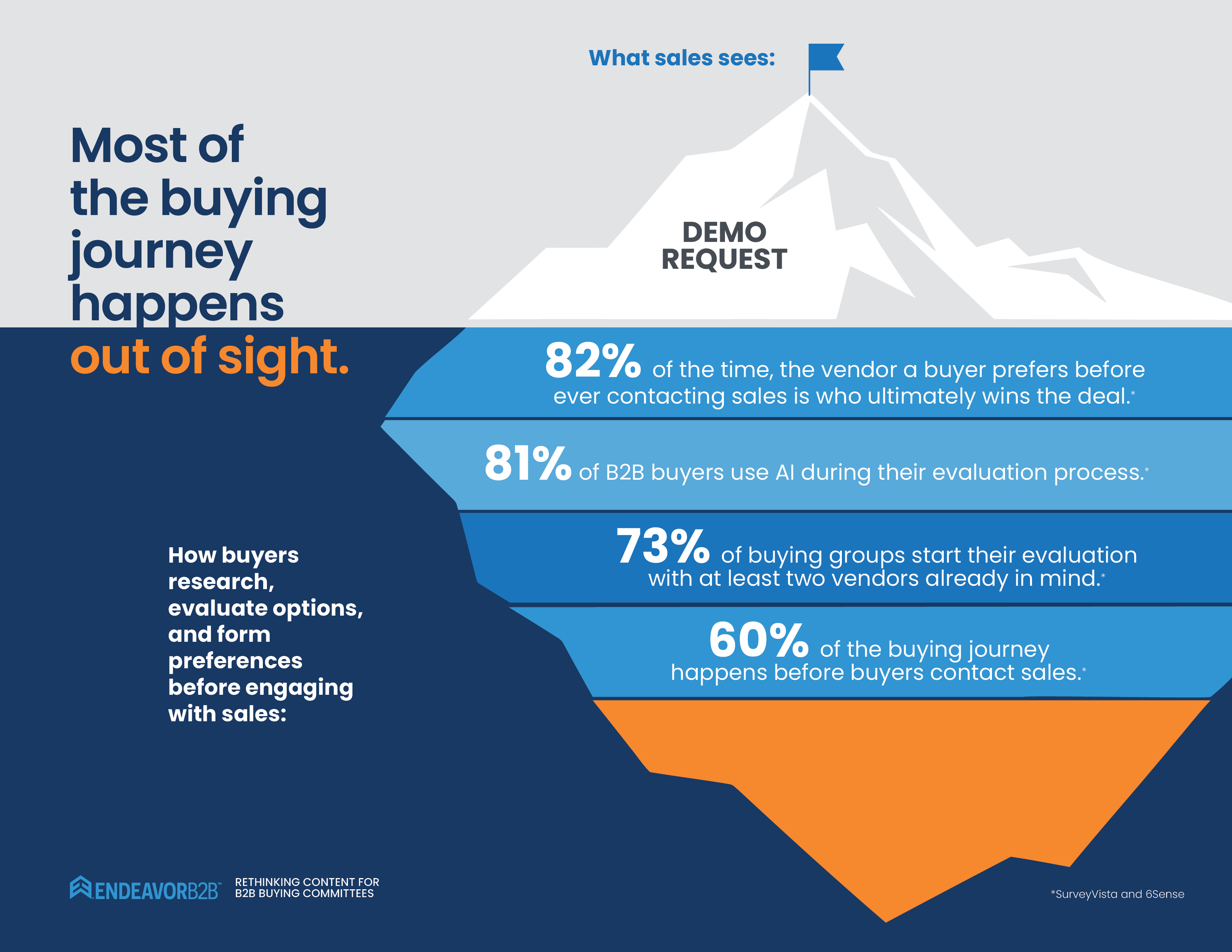
During the same Lunch & Learn, Amanda discussed the dark funnel, the research and conversations that happen outside the channels marketers can easily track.
Buyers are comparing vendors through AI tools, reading third-party research, consulting peers, and discussing options internally before contacting a salesperson.
By the time someone requests a demo, other members of the B2B buying committee may have already formed opinions about which solutions deserve consideration.
This makes the quality and accessibility of your content especially important.
If an IT director searches for integration requirements, can they find an answer? If a finance leader asks an AI tool to compare vendors, is there enough credible information available about your solution?
Amanda emphasized the importance of producing strong editorial content while making it discoverable through SEO, AEO, and GEO.
The takeaway for marketers is to understand where different stakeholders look for information and make sure your content can answer their questions.
What Can Content Engagement Tell You About Purchase Intent?
The content someone consumes can also offer clues about where they are in the purchasing process.
Our Chief Digital Officer, Jacquie Niemiec, explored this during the Lunch & Learn, discussing how selection guides, vendor comparisons, and pricing information can help marketers recognize purchasing signals.
Consider two prospects researching enterprise software.
One reads an article about the latest industry trends. The other downloads a vendor comparison guide and reviews implementation requirements.
Both are showing interest, but their activity suggests different needs.
As Jacquie explained:
“Anytime someone consumes…a selection guide, a product comparison… it helps us to be able to determine if this buyer is actually moving into more of the purchasing phase.”
These interactions become more useful when you consider them alongside other activities within the same account.
No single download confirms purchase intent. But understanding which stakeholders are engaging, and with what content, can help your team determine where to focus its efforts.
How to Build a Content Strategy Around the B2B Buying Committee
You don’t need to create a separate campaign for every job title. Start by looking at the people involved in purchasing your solution, the questions they ask, and the content you already have.
1. Find the Gaps in Your Content Library
Review your existing assets against the five stakeholder groups mentioned above.
You may have plenty of thought leadership and educational content for your primary audience, but very little that helps finance evaluate costs or IT assess technical requirements.
Look for unanswered questions that could prevent someone from supporting the purchase.
2. Get More Value From Your Existing Content
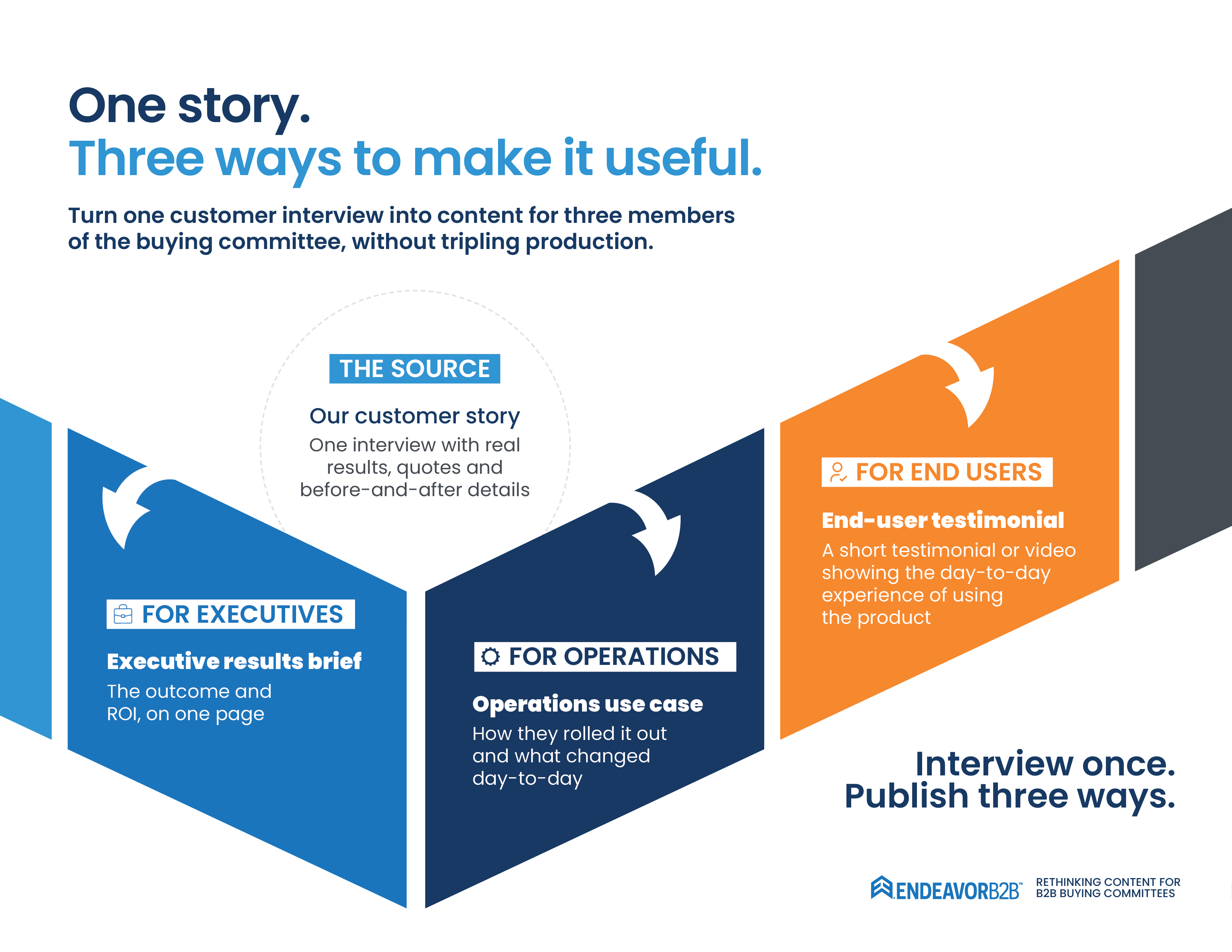
A single customer success story can provide useful information for several members of the buying committee.
An executive may want the business results, while operations is interested in how the solution improved workflows. An end user may care most about the experience of adopting it.
You can use the same customer story to develop an executive summary, a practical use case, and a short testimonial video.
Jacquie discussed this approach, encouraging teams to build on original research and expert interviews to create articles, videos, podcasts, and social content.
Start with strong source material, then adapt the information to the questions different audiences are asking.
3. Use Audience Behavior to Guide What Comes Next
A job title can tell you something about a person’s responsibilities, but their content engagement may tell you more about what matters to them right now.
Someone repeatedly reviewing technical documentation may benefit from an implementation webinar. A stakeholder comparing vendors may be ready for a more detailed evaluation guide.
Use those insights to make your campaigns more relevant and give sales teams better context for their conversations.
4. Keep the Message Consistent Across Channels
B2B buying committee members won’t necessarily encounter your brand in the same place.
One may discover you through an industry publication, another through LinkedIn, and another through a webinar or AI-powered search.
Your content should address their individual questions while communicating a consistent story about your solution’s capabilities and value.
That consistency helps stakeholders evaluate the same investment, even when they’re conducting research independently.
Give Every Stakeholder a Reason to Move Forward
As B2B buying committees become more complex, marketers have an opportunity to play a greater role in how purchasing decisions take shape.
The content you create can influence conversations happening long before a prospect reaches out, helping your brand earn consideration across the organization. Ultimately, the goal is to make your solution easier to understand, evaluate, and advocate for, wherever someone sits at the decision-making table.
If you enjoyed this content and want marketing know-how delivered straight to your inbox, you’ll love our Marketing Minds newsletter. Sign up here>>